

8 Things Medical Malpractice Insurance Does Not Cover
Dec 09 2025Medical malpractice insurance serves as an important safety net for health-care professionals, protecting them from the financial devastation that can result from patient lawsuits. However, many practitioners operate under the misconception that their malpractice coverage provides blanket protection against all potential legal and professional challenges they might face.
The reality is far more complex. While malpractice insurance covers a range of professional liability issues, medical malpractice insurance does not adequately cover the following eight things, leaving health-care providers financially vulnerable. Understanding these limitations is necessary for any health-care professional who wants to maintain comprehensive protection for their practice and personal assets.
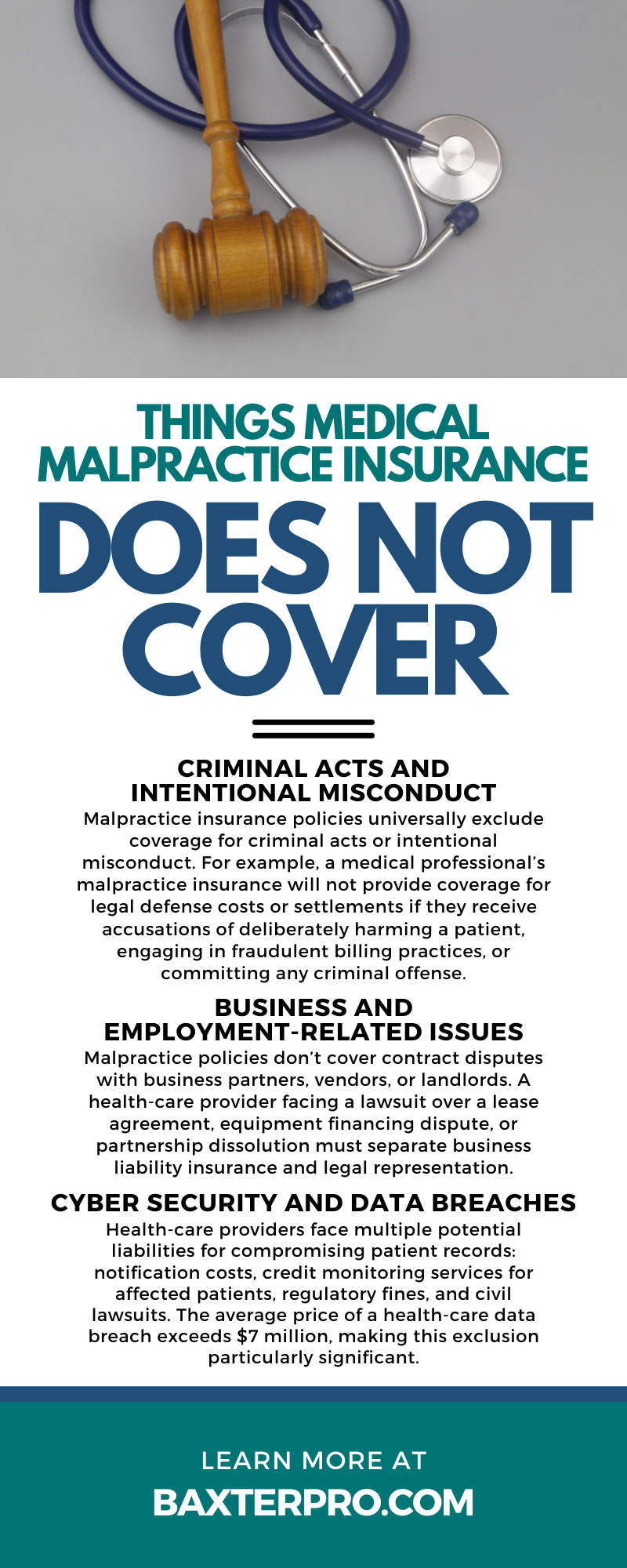
Criminal Acts and Intentional Misconduct
Malpractice insurance policies universally exclude coverage for criminal acts or intentional misconduct. For example, a medical professional’s malpractice insurance will not provide coverage for legal defense costs or settlements if they receive accusations of deliberately harming a patient, engaging in fraudulent billing practices, or committing any criminal offense.
The distinction between negligence and intentional acts is crucial. While malpractice insurance covers unintentional errors in professional judgment or treatment, it draws a hard line at deliberate wrongdoing. For instance, accusations of sexual misconduct between a medical provider and a patient, or said medical provider intentionally prescribing unnecessary treatments for financial gain, would require the provider to seek separate legal representation and cover all associated costs personally.
Business and Employment-Related Issues
Medical malpractice insurance focuses specifically on patient care liability and does not extend to broader business operations. Employment-related lawsuits, including wrongful termination, discrimination, harassment, or wage and hour disputes, fall outside the scope of malpractice coverage.
Similarly, malpractice policies don’t cover contract disputes with business partners, vendors, or landlords. A health-care provider facing a lawsuit over a lease agreement, equipment financing dispute, or partnership dissolution must separate business liability insurance and legal representation.
Employment practices liability insurance (EPLI) and general business liability coverage address these gaps, but they require separate policies. Many health-care providers, particularly those running larger practices or employing multiple staff members, find these additional coverages essential for comprehensive protection.
Cyber Security and Data Breaches
With health care increasingly digitized, cybersecurity threats pose significant risks to medical practices. However, traditional malpractice insurance policies typically exclude coverage for data breaches, cyber attacks, and related privacy violations.
Health-care providers face multiple potential liabilities for compromising patient records: notification costs, credit monitoring services for affected patients, regulatory fines, and civil lawsuits. The average price of a health-care data breach exceeds $7 million, making this exclusion particularly significant.
HIPAA violations stemming from cybersecurity incidents can result in substantial regulatory penalties that malpractice insurance won’t cover. Health-care providers need specialized cyber liability insurance to address these risks, which have only grown more prominent as practices adopt electronic health records and telemedicine platforms.
Property Damage and Equipment Issues
Malpractice insurance covers professional liability but not property damage or equipment-related incidents. If medical equipment malfunctions and damages a patient or facility, or if a fire in your office injures someone, it typically falls under general liability or property insurance rather than malpractice coverage.
This distinction can be particularly important for practices using expensive diagnostic equipment or those offering specialized treatments. Equipment failures that result in patient injury might have both professional liability and product liability components, requiring careful analysis of which insurance policies apply.
Understanding this limitation can ensure appropriate coverage across all potential risk scenarios for chiropractors and other practitioners using specialized treatment equipment. Equipment-related incidents can be costly in terms of patient care implications and property replacement needs.
Regulatory Fines and License Defense
While some malpractice policies include medical board defense coverage, many standard policies exclude regulatory fines, sanctions, and certain types of licensing issues. When Often, health-care providers facing an investigation by state medical boards, DEA enforcement actions, or other regulatory proceedings, must cover the associated legal costs and potential fines.
Regulatory defense insurance or enhanced malpractice policies with specific regulatory coverage can address these gaps. Given the increasing scrutiny from health-care regulators and the potentially career-ending consequences of regulatory actions, this coverage gap represents a significant exposure for many health-care providers.
The distinction between defending against regulatory actions and paying resulting fines is important. Even policies that cover defense costs may exclude the actual monetary penalties imposed by regulatory bodies.
Personal Activities and Non-Professional Services
Malpractice insurance only covers activities performed within the scope of professional practice. If a health-care provider offers medical advice or assistance in a personal capacity—such as helping at an accident scene or providing informal treatment to friends—their professional malpractice policy likely won’t offer coverage.
This limitation extends to volunteer work, unless specifically covered by the policy or through separate volunteer liability insurance. Many health-care providers participate in medical missions, community health fairs, or other volunteer activities without realizing they may lack malpractice coverage for these well-intentioned services.
The boundary between professional and personal activities can be complex, particularly for practitioners who provide care in multiple settings or who maintain consulting relationships outside their primary practice.
Product Liability and Pharmaceutical Issues
Health-care providers dispensing medications, medical devices, or other products, may face product liability claims that fall outside malpractice coverage. While prescribing medications generally falls within professional liability, selling or dispensing products can create separate product liability exposures.
This distinction becomes particularly relevant for practices that sell supplements, medical devices, or other health-related products. Product liability issues typically require specialized coverage that addresses manufacturing defects, design flaws, or inadequate warnings associated with products rather than professional judgment in their recommendation or use.
Alternative Practice Exposures
Health-care providers who offer services outside traditional medical practice may find coverage limitations in standard malpractice policies. These limitations can include cosmetic procedures performed for purely aesthetic purposes, experimental treatments, or services that fall outside the provider’s licensed scope of practice.
Malpractice insurance for chiropractors, wellness services, or other alternative treatments can be indispensable for practitioners offering integrative medicine to protect your practice from the limitations of most standard insurance policies. A careful review is important to guarantee coverage extends to all services provided.
Some treatments that blend traditional medicine with alternative approaches may create coverage gaps that require additional insurance products. The evolving nature of health care delivery, including telemedicine and other innovative service models, can create new exposures that traditional malpractice policies may not adequately address.
Building Comprehensive Protection
Now that you know the eight things medical malpractice insurance does not cover adequately and understand the limitations, consider taking the next steps to explore your coverage options. Professional liability coverage remains essential for any health-care provider. Comprehensive protection requires a strategic approach that addresses all potential exposures through appropriate insurance products and risk management practices.
Working with experienced insurance professionals who understand health care liability can help identify coverage gaps and develop comprehensive protection strategies. The investment in proper insurance coverage pales in comparison to the potential financial devastation of being uninsured for a significant claim.
Baxter & Associates specializes in helping health-care professionals navigate these complex coverage decisions, ensuring they have appropriate protection across all aspects of their practice. Rather than discovering coverage limitations after a claim occurs, proactive planning can provide the peace of mind that comes with knowing you have adequate protection.